It’s hard to believe that Kosta Browne, which is perhaps at
this point California’s most esteemed Pinot Noir producer, was only founded as
recently as 1997 by Dan Kosta and Michael Browne.
Dan Kosta and Michael Browne, the latter a sommelier, working at the
same restaurant, pooled their tips to make a single barrel of wine in 1997.
The brand’s trajectory over the following decades was truly
extraordinary, fueled by a combination of some bombastic and delicious wines, terrific
winemaking, and skilled marketing that had not been seen to date in the
California Pinot Noir sphere.
It was a time when California Pinot Noir was certainly
reaching new heights of quality in numerous regions, and was riding a serious
optimistic trend. Kosta Browne didn’t grow its own grapes, but the wines were
commanding some of the highest prices ever seen for California Pinot Noir.
In 2009, the brand sold for about $40 million dollars,
despite having no vineyards and not even its own winery. It was selling almost
all of it’s 11,000 case production direct to a consumer mailing list.
Numerous investors injected much more money into the hot brand
between 2009 and 2015, allowing Kosta Browne to acquire some vineyards of its
own, and build a winemaking facility at The
Barlow in Sebastapol. The brand was eventually acquired by a premiere luxury wine
company, The Duckhorn Portfolio,
in 2018, which gave it another infusion of money enabling Kosta Browne to not
only expand vineyard holdings, but to extend its Pinot Noir production to
Oregon and Burgundy.
About Julien Howsepian, Winemaker:
Amid all of this churn, check-cashing, and
mission evolution, an unpretentious intern named Julien Howsepian, a Bay Area native of Orinda California, slowly worked his way up the winemaking ladder from
starting as a harvest intern in 2012.
By 2019 Howsepian was named head winemaker, and his
influence has absolutely shaped the profile of Kosta Browne wines as the brand settled into an industrial
warehouse in a hipster food-and-wine incubator called The Barlow in Sebastapol,
Sonoma County, with every aspect of the Kosta-Browne production facility custom-tooled for the production of superb Pinot Noir.
 |
| Julien meets me at the door with the first vintage of KB bubbly made in-house. It was damn good. |
|
An East Bay kid who grew up tailgating at A’s and Raider’s
games, Julien has a French father and a Dutch Mother, and as a child he often
visited relatives in France, including some relatives in the wine business.
Julien is laid-back and easy to like. Usually
sporting a baseball cap, he is calm, not particularly dramatic, and he does not do a lot of
name-dropping or score-referencing. He does not brag about his connections,
ratings, or other places he has worked. He just stands by what he produces and
doesn’t tend to gild the lily, all of which which I greatly appreciate for a winemaker of his stature.
Today’s Kosta Browne wines are no longer outsized. They are
refined, elegant, generally showing very subtle oak. The wines voice their place
quite clearly, transparently even. They are technically flawless, and impeccably
made.
Sure, there’s an ebb and flow from vintage to vintage, but
you’d be hard pressed to point out a glaring absence in anything that Julien
makes. The quality control is superb, and he’s quick to credit his whole
production team on that front.
I believe Howsepian
has been instrumental in steering this brand’s rather exclusive and
very seasoned customer base toward a more erudite style of Pinot Noir than
they were probably accustomed to 20 years ago, when Kosta Browne was spawned. But then I have to consider the fact that folks who can afford Kosta Browne's wines can also probably afford extremely fine Pinot Noir from Burgundy, so they're probably a more worldly sort than your average California wine aficionado, or me, for that matter.
I met with Kosta Browne winemaker Julien Howsepian in March of 2024 to taste some 2021 and 2022 new releases at Kosta
Browne’s immaculate winemaking facility at The Barlow in Sebastopol. He greeted
me at the front door with a glass of KB’s new bubbly made in-house (makes a nice impression!), and we took
it from there.
Kosta Browne makes about 34 different wines (or SKUs as known in the trade) per
year, and we tasted about half of them. Most are Pinot Noir, but Kosta Browne
also makes a handful of superb Chardonnays, which should not be missed. Some of
the more recent bottlings added to the portfolio include Pinot Noirs from Santa
Lucia Highlands (Monterey County), added in 2005, and more recent adds like vineyards
in Willamette Valley, Santa Rita Hills (Santa Barbara County), and few communes
in Burgundy, France.
 |
| A list of the wines we tasted. |
|
Vintage 2022:
Julien says 2022 was a lot like 2017, with a heat wave
toward the end, and a compressed harvest, with lots of overlap between areas. “Usually
Russian River Valley is picked first, and Anderson Valley is last for harvest. We
were done in California just before the Oregon harvest started. In 2022 the
wines turned out really well. Having good vineyards makes the vintage.”
The Wines:
Kosta Browne 2022 Russian River Valley Pinot Noir ($120). Young, but complicated with violet,
chewable grape vitamin, some baby fat. Framboise, sweet, ripe cherry, not too
heavy or sweet. Super refined, sophisticated, with mild herb notes. 20%
fermented in oak, small percentage of whole cluster. Not intended to make a
stemmy wine, but just to add a little texture. Picked all before the heat wave.
(94 Points)
Julien says, “I think RRV might be the pearl, the
finest region for Pinot Noir and Chardonnay.”
Kosta Browne 2022 Sonoma Coast Pinot Noir ($120) Gap’s Crown vineyard is the base source of
this wine. 38 acres owned by Kosta Browne, and this is the brand’s flagship
single vineyard wine, the rest of the fruit comes from Sonoma Coast. Blueberry,
nectarine, and cinnamon notes. It's a very dynamic wine, with a touch of cocoa. “We’re the only producer that
gets fruit from the very top of the site,” says Howsepian. Gap’s Crown was planted by Bill
Price (Three Sticks) in ’05, and
08, Kosta Browne purchased a long-term lease in 2013. (95 Points)
 |
| What we tasted today, about half of the total wines annually produced by Kosta Browne. |
|
Fermentation and maturation vessels used at Kosta Browne:
Howsepian uses a variety of fermentation and maturation
vessels at Kosta Browne. There are a lot of small, ultra
high-quality oak fermenters with limited temperature control, precisely
controlled stainless steel fermenters, and small concrete egg-shaped fermenters
that have a more complicated, self-contained temperature control. Each plays an
important role in the winery. Temperature control during the fermentation
process can influence the ultimate flavor and character of the finished wine
because the temperature governs all of the chemical reactions that take place
during the fermentation process. Fermentation is a feverish reaction that
raises temperature in the fermenting grape must. Keeping the fermentation
temperature even and moderated can preserve freshness in wine.
“The woodies (the wood fermenters) are like exercising
with a hoodie on, it starts to get hot. We take the lids off and a lot of heat escapes.
Stainless steel is like exercising in shorts and a tank top. Concrete
fermenters are like swimming in a pool. Much more gentle, with a long temperature
curve.”
 |
The "woodies," small, open-top oak fermenters.
|
Kosta Browne 2022 Santa Rita Hills, Santa Barbara County
Pinot Noir ($120) KB’s first Santa Rita Hills
bottling from Santa Barbara County started in 2016 and is now comprised of an
assemblage of fruit from Mt. Carmel, Rita’s Crown, Bedrock, Radion, Sebastiano,
La Rinconada, and Sanford & Benedict vineyards. (all cream of the crop).
“It has a plush texture, decent acid, is layered, and deep. They
have early budbreak, and usually pick pretty late. The Rita’s crown grapes get
super black, but with great acid. It’s probably a ripe, polarizing wine, coming
from mostly hillside, steep terroir. The wine shows some serious power and
ripeness,” says Howsepian. This is a big, delicious Pinot, with deep color and
concentration, plenty of black fruit and density, but it does have some
brightness. This will definitely appeal to those that like a richer, fleshier
style of Pinot Noir and it is exceptionally well-made and seamless. (94 Points)
Vintage 2021:
“I think 21 is one of the best vintages in my career. It was the welcome sigh of relief at the time. Everything
happened the way it was supposed to.”
Kosta Browne 2021 Gap’s Crown Pinot Noir Russian River
Valley, CA ($175) “I do consider
this to be our flagship single vineyard bottling. I think this is such an
incredible wine every year, super consistent blue fruit, generous, easy
drinking. We play around with the fruit because we have a lot of it,” says
Howsepian. Blueberry, violet aromas up front with a hint of toast, and supple blackberry, and red cherry on the palate. It has a great range of flavor., very dynamic, with very good acid. I think this is an exceptional
vintage for this wine. (97 Points)
Kosta Browne 2021 Bootlegger’s Hill Estate Series Russian
River Valley, CA ($210) “This vineyard was planted and is
farmed by Charlie Chenoweth. It’s between here (Sebastopol) and Occidental,
relatively cool, on a knoll with 360-degree visual exposure, and it’s somewhat
foggy and cool. When the temperature is soft and gentle, you get a soft fruit
spectrum. It’s a little like a candy store for winemakers, lots of clones and
rootstocks. It’s fermented in concrete and oak, it's velvety and bright at the same
time… It’s like a sundress, it just waves in the breeze.” says Howsepian. This is a late
ripening Russian River Valley site because of the coolness, and it picks more in line with Sonoma
Coast vineyards. This vintage sees 56% new oak, but you wouldn’t know it just by tasting
it. The well-seasoned oak definitely takes a backseat to the silky dark red
fruit in this medium-bodied, subtle, plush, complex Pinot. This is pure Russian River Pinot Noir with every edge polished perfectly. (96 Points)
2021 Kosta Brown Cerise Vineyard Pinot Noir Anderson
Valley, CA ($210) “I think this is a wine that’ll make you think, maybe it’s
not for everyone,” says Julien. It’s definitely for me, for whatever that's worth. It hails from different
pitches, swales, steep hillside and windy sites. Initial hint of pennyroyal herb, hint of conifer,
blueberry, violet, lively, great structure. Built to last. Definitely has a bit
of tannin, great acid. Love it. Aged 18 months. It leaves my mouth watering. A
stellar wine, this just wants a bit of food with protein to soften the tannins
in this youthful phase. (98 Points)
The Expansion of Kosta Browne:
“Before 2016, we were Sonoma Coast plus Santa Lucia
Highlands. That’s still our identity, but maybe we weren’t including SLH as
much in the story. The new GM said, "Why should we be constrained and just become
a CA producer?" Then some other doors opened and the boundaries were
re-evaluated. We gave Burgundy a shot, and then Willamette Valley.”
2021 Shea Vineyard Pinot Noir, Willamette Valley, OR ($175) A lovely wine from the legendary Shea
vineyard. Interesting, a bit leaner than the California offerings, just as you might
expect from an Oregon wine, also a little velvety, pleasantly fuzzy and smooth on the palate, with lots of juicy red fruit, good
acid, and tremendous finesse. (93 Points)
Making wine in many different areas is challenging:
“Managing a lot of sources is tough, but we have an
awesome team. Peter Virtue has been on my team since 2014. He started as an
intern in ’11, and we’ve worked together 10 years. He’s my right hand man. He
focuses on what’s happening here in the winery. We do WV and Burgundy, but
that’s less than 20% of our production. A lot of our team has been here since
these new projects started, and everyone takes pride in their work. We have a
super professional staff.”
“I go to up to Willamette Valley during harvest, and the
vintages don’t overlap (with California) that much. Portland is so easy to get to from Santa
Rosa. I can go for one night if I want to. It takes longer to go to Santa Lucia
Highlands (driving). We make the wine in Oregon so that it can be legally labeled Willamette
Valley wine.”
On making wine in Burgundy:
“Once you source quality fruit and a find a good winemaking
partner, it works well. They actually enjoy following our protocols. We’re not
doing anything crazy. They appreciate knowing what appeals to American
consumers.“
 |
| A quick overview of the tasting. |
|
2021 Pommard Pinot Noir Burgundy, FR ($130) “There was a lot of frost damage in
April, especially in the Côte
de Beaune with the whites. It was a wet, rainy spring. Coming out of some very
warm vintages, this is a more typical vintage. Red fruit, cherry, raspberry,
pinch of cayenne pepper or red bell pepper, bit of tannin,” says Julien. Yep,
this one is a little tannic, as Julien says, with some bright red fruit and a
pronounced limestone character that lends it a strong sense of place. It clearly shows some pedigree and a sense of place. “I waver on how
long to recommend when to drink it,” says Julien. (93 Points)
2021 Beaune Premier Cru Burgundy, FR ($130) Complex, deep, and structured, with
plush red cherry, raspberry, and limestone aromas and flavors with a spicy
finish. “We use a fair amount of whole
cluster fruit in the fermentation to build structure to bolster the plushness,”
says Julien. (96 Points)
2022 One Sixteen Chardonnay Russian River Valley Sonoma
Coast, CA ($90) Some legendary Sonoma vineyards go into this
wine, like Zio Tony, Ritchie, and Charles Ranch (Sonoma Coast). “We tread it,
break it and go for a lot of solids into the juice, anti-oxidative strategy,
then get oxygen into the wine,” says Howsepian. This wine is a bombshell.
It has just a hint of flinty, reductive character, plus expressive lemon curd, tangerine,
and kaffir lime leaf notes. It just goes and goes. Brilliant fruit from stellar vineyards made in a glowing, sunny, bright California style. (98 Points)
2021 El Diablo Vineyard Chardonnay Russian River Valley,
CA ($175) This is always a first or
second pick of the year near Windsor. It has lemon, peach, and toast notes with
a hint of salinity. “Russian River Valley Chardonnay can get very fruity and
floral, and we’re not looking for that,” says Howsepian. A terrific wine,
but the oak stands out a bit right now, in my humble opinion, but that may blend in over the next year. (93 Points)
2021 Bootlegger’s Hill Vineyard Russian River Valley, CA
($170) A very complex, flinty,
Chardonnay that's aged 8 months in barrel on the lees, then 8 months in stainless
steel to let it settle out. I has flint, hazelnut, white peach, clover, white
pepper, and green apple notes, and I suspect it will develop really well over the next few years. (95 Points)

-product-image-193-large.jpg)









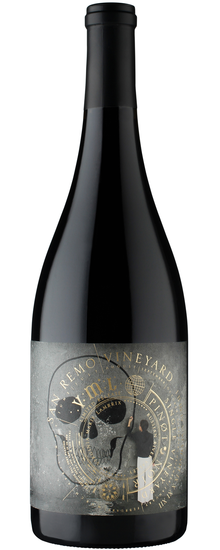 This impressive, lucid, raspberry, strawberry, and cinnamon-scented Pinot Noir is made from 100% Dijon clone Pinot Noir and shows plenty of Russian River Valley character, from the velvety mouthfeel to the slightly elevated alcohol, which clocks in at 14.5% but isn't at all out of balance. It's a terrific wine, and there's a skull on the label for whatever that's worth. (93 Points)